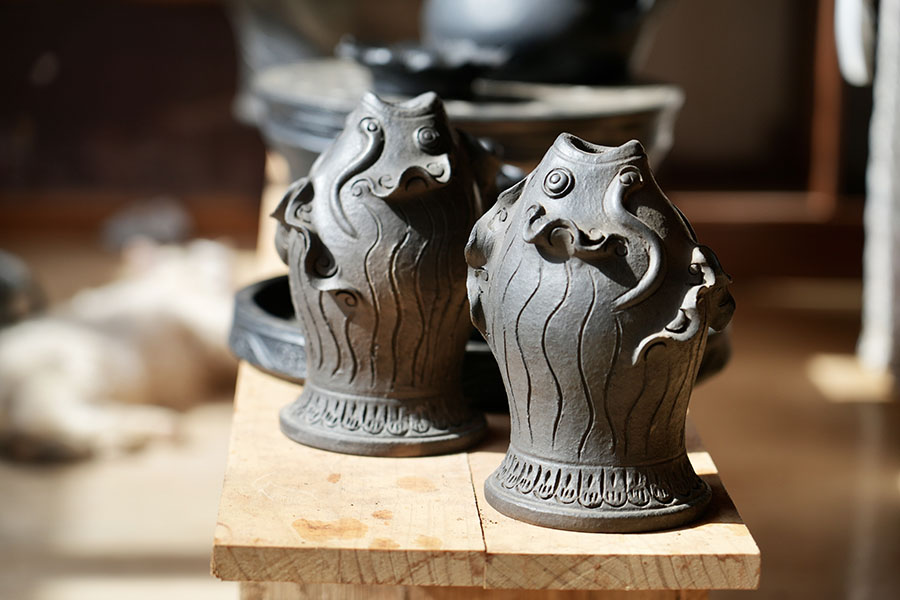
Tibetan Black Pottery Making Technique
Introduction
Tibetan black Pottery is a traditional form of ceramic art that holds significant cultural value, particularly in Tibetan-inhabited regions like Shangri-La in Yunnan province, Daocheng in Sichuan province and Yushu in Qinghai province.
Renowned for its deep black hue, black pottery is recognized as a national-level intangible cultural heritage. The craftsmanship involved in creating these ceramics dates back over 2,000 years and is deeply intertwined with the cultural heritage of Tibetan communities. In recent years, the art of black pottery has become not only a cultural symbol but also a significant factor in boosting local economies through tourism and trade.
Characteristics
Black pottery is distinct for its glossy black finish, which is achieved through a meticulous firing process. The pottery often features intricate designs that reflect the cultural symbolism and aesthetics of Tibetan communities. The black color is primarily achieved using natural minerals as colorants, giving the pottery its characteristic dark, lustrous appearance. The pottery is not only valued for its visual appeal but also for its utility in everyday life. Traditionally, black pottery items served as essential tableware, cooking utensils, and tea sets in Tibetan households.
Production Process
The production of black pottery is a labor-intensive process that involves several key steps, each requiring precision and skill. It begins with the selection and preparation of raw materials, followed by shaping, decorating and finally, firing the pottery to achieve the desired finish.
Raw Materials
The clay used in black pottery comes from specific regions known for their rich mineral content. In places like Nixi, the unique soil contributes to the distinctive qualities of the pottery. The production process involves carefully blending different types of clay with other natural materials like weathered sand and gravel, which are essential for achieving the pottery's characteristic look and feel.
Techniques
The techniques used in black pottery production have been refined over centuries. Artisans employ traditional wooden tools for shaping and decorating the clay, which is then subjected to a high-temperature firing process. This step is crucial, as it determines the final color and texture of the pottery. Additionally, various decorative techniques, such as motif scraping and glaze spilling, are employed to create intricate patterns and designs on the pottery surfaces.
Modern Use
Today, black pottery continues to evolve, blending traditional craftsmanship with modern design elements to cater to contemporary tastes. This has led to the creation of a wide range of products, from traditional cooking pots to modern decorative and functional items like coffee cups and pendants. The growing popularity of black pottery has also made it a key attraction for tourists visiting Tibetan regions, contributing significantly to local economies.
Preservation and Promotion
The black pottery craft was included in China's national intangible cultural heritage protection list in 2008. This designation helped preserve the tradition and encourage innovation, allowing artisans to expand beyond traditional utility items to create diverse products such as vases and decorative pieces.
Efforts to preserve and promote black pottery are ongoing, with significant contributions from both local communities and government initiatives. Training programs and workshops are established to pass down traditional techniques to younger generations, ensuring the craft's continuity. Moreover, the incorporation of black pottery into cultural tourism has helped raise awareness of its cultural significance and attract investment in local infrastructure and development projects.
Through these combined efforts, black pottery not only remains a cherished cultural artifact but also serves as a catalyst for economic growth and cultural exchange in Tibetan regions.








